

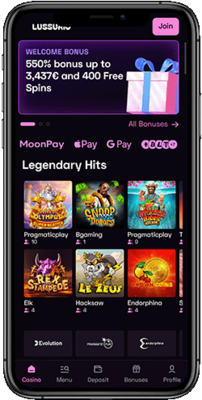
When comparing casino lussurio on a phone and a desktop, the practical question is not simply which screen is larger. It is how comfortably each device supports browsing, live tables, account checks and session boundaries. The available information describes a browser-based service that works on modern smartphones and tablets, alongside ordinary desktop access. That makes navigation and usability more useful comparison points than assuming a downloadable app, identical layouts or the same experience on every device.
Which device suits different casino tasks?
A phone is generally the more convenient choice for short browsing sessions and flexible access. A modern mobile browser can display slots, live casino content, promotions, account areas and cashier functions without requiring a desktop computer. This can suit someone checking a game category during a break, reviewing an account message or moving between locations. The trade-off is limited screen space: menus may collapse, game thumbnails may be smaller and several account details may require more scrolling.
A desktop or laptop is usually more comfortable when the task involves comparison. A larger display can make provider names, game filters, promotional conditions and account information easier to read together. It may also be preferable for live-dealer games, where table controls, chat, game history and the video feed compete for attention. A full keyboard can make password entry and support conversations less awkward, particularly when identity or payment information must be supplied.
The best choice therefore depends on what the session is meant to accomplish. Use a phone when portability and quick navigation matter most; choose a desktop when reviewing several categories or reading detailed conditions. Neither device changes the underlying rules, verification requirements or game mathematics. A larger screen may improve visibility, but it does not make outcomes more predictable. Treat the device as a usability decision rather than a strategy for improving results.
How should the browser experience be checked?
Start by opening the service in a current browser rather than assuming that every device has the same compatibility. On a phone, check whether the navigation menu is easy to expand, whether game tiles load without excessive delay and whether buttons remain visible in portrait orientation. Rotating the device can help with live content, but a layout that only works horizontally may be inconvenient for ordinary browsing.

On a desktop, examine how quickly the main categories can be reached and whether filters remain available after opening a game. A useful interface should make it reasonably clear how to return to the lobby, switch between slots and table games, and locate account or support areas. If a page opens multiple panels, note whether important information becomes hidden behind pop-ups. Good navigation reduces accidental selections and makes it easier to stop when intended.
Browser access should not be confused with a native application. The available material supports instant-play access through modern smartphone and tablet browsers, but it does not establish a verified iOS App Store or Google Play listing. Avoid installing files from unofficial sources merely because an advertisement describes an “app.” For general online-safety habits, readers can consult Canada’s Get Cyber Safe guidance before entering credentials or downloading software.
What changes when live games are viewed on a small screen?

Live-dealer games place different demands on a device than conventional slots. The video feed, betting controls, table information and sometimes a chat panel may all need to remain visible. On a phone, these elements can be compressed or separated into tabs. That may be manageable for a simple layout, but it can become tiring when the player must repeatedly scroll to confirm a selection or read a table message.
A desktop display offers more room for observing the table and checking controls at the same time. It can also be easier to compare several live categories, including blackjack, roulette, baccarat and game-show formats, without repeatedly returning to the lobby. However, the larger view should not encourage longer sessions by default. Comfort and visibility are useful, but they can also make extended play feel effortless and less noticeable.
Before choosing a live table, check whether the controls are legible, whether the video can be muted, and whether the layout remains stable when the browser window changes size. Connection quality matters on both devices: a strong signal cannot guarantee uninterrupted service, and a pause or reload may affect the flow of a session. If the interface becomes confusing, leaving the table is more sensible than continuing while trying to reconstruct what happened.
When does a larger screen improve account management?
Account tasks are often easier on a desktop because forms, instructions and document requests can be viewed with less scrolling. Registration information may include a legal name, residence details and contact information, while verification can require identity evidence, proof of address and confirmation that a payment method belongs to the account holder. Reading each field carefully helps avoid errors that later require support review.
That does not make phone access unsuitable. A phone may be practical for confirming an email or phone number, contacting support through a browser and checking an account message while away from home. It is less convenient when documents must be photographed, resized or uploaded repeatedly. Before submitting anything, check that the document is readable and that the requested file type and size are accepted. Do not send sensitive information through an unofficial channel.
Account recovery also benefits from a calm, uncluttered setup. Available information describes a login-recovery route and customer support, but it does not consistently document every authentication screen or recovery option. If access is restricted, verification is incomplete or a withdrawal is under review, use the stated support route and keep messages factual. Changing devices will not remove duplicate-account rules, identity checks or a pending compliance review.
How can device choice support clearer session boundaries?
Navigation is connected to control. A phone makes access easy to carry into spare moments, but that convenience can blur the distinction between planned play and impulse browsing. A desktop kept in a particular room may create a more deliberate routine, while a phone may make it simpler to end a session if the browser is closed and notifications are disabled. Neither arrangement is automatically safer; the surrounding habits matter.
Use the account controls that are available, including deposit, wagering, loss, time or session limits, reality checks, cooling-off periods and self-exclusion. Their exact operation should be confirmed in the account area and applicable terms. Set boundaries before opening a game rather than after losses or frustration have changed the decision. A larger screen should not be treated as permission to increase stakes or extend the planned time.
Practical friction can also help. Keep gambling pages separate from ordinary browsing, avoid saving passwords on shared devices and log out when using equipment that other people can access. On mobile, review browser permissions and avoid unknown notifications or installation prompts. If a session stops feeling recreational, close the site and use a cooling-off or self-exclusion option where appropriate. Device convenience should serve a pre-decided plan, not replace one.
Questions readers often ask about device access
Is a dedicated mobile app confirmed?
The available information confirms browser-based access on modern smartphones and tablets. Some directories describe a mobile application, but a verified App Store or Google Play listing has not been established. Readers should therefore treat a native app and mobile-browser access as different options, and avoid downloading installation files from unofficial websites.
Is desktop access better for live casino games?
A desktop can be more comfortable because its larger display leaves additional room for the dealer video, table controls, chat and game information. It is not automatically better for every player, however. Connection quality, browser performance and personal session limits still matter, and a larger screen does not change game outcomes.
Can the same account be used on both devices?
The available material describes account access through login credentials, but it does not set out every device-specific rule. Use only your own account, keep personal details accurate and follow the stated terms. If switching devices triggers an access problem, contact the published support channel instead of creating a second account.